
- March 12, 2026
- Posted by: Dave Kurlan
- Categories: Analogies, Understanding the Sales Force
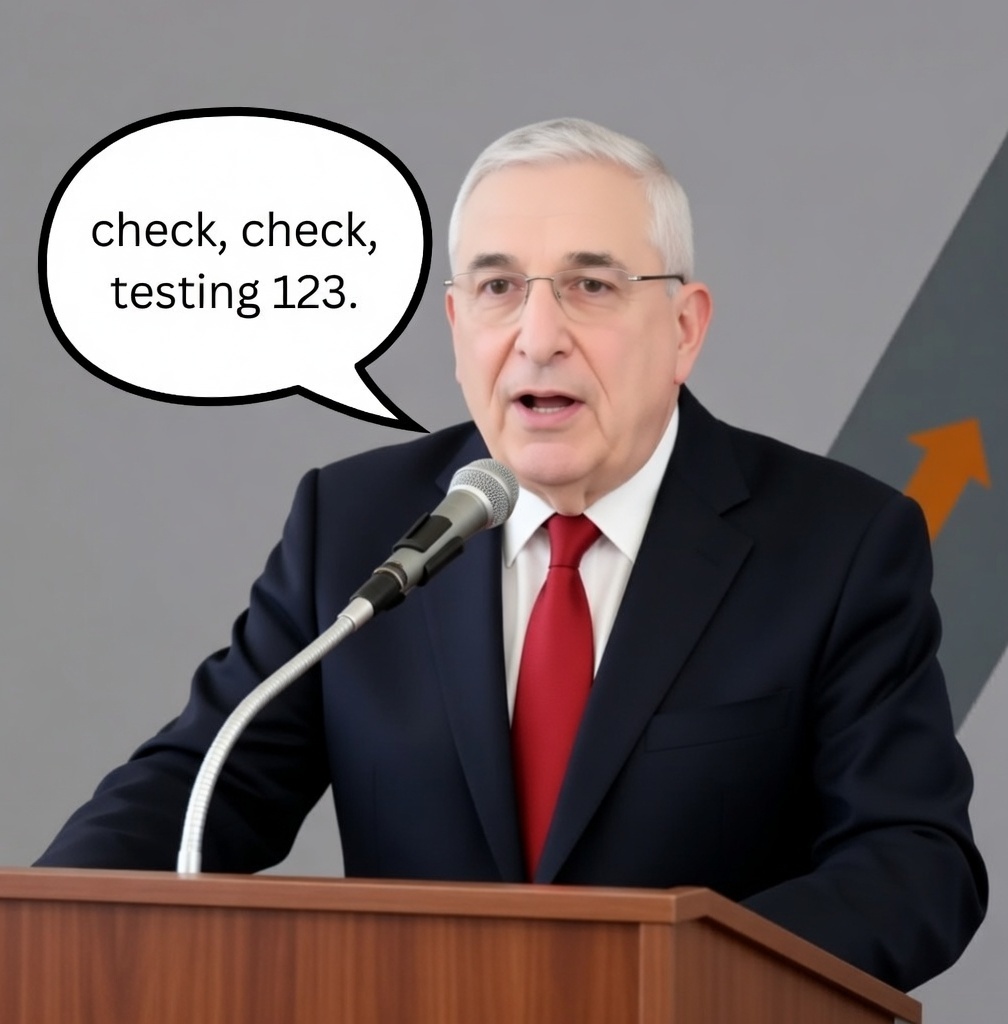
Testing. Testing. Testing 1, 2, 3. Check check.
Before a speaker (like me) speaks, or before a band takes the stage, the roadies, techies and sound crews always, and I mean, always do a sound check.
It’s time to do a sales best practices check so I raised my hand, took responsibility, did the checking and I’m here to report on three best practices that need an overhaul for 2026 and beyond. And no, AI does not make an appearance in this article.
The Closing Competency
When we look at sales best practices, top salespeople take a consultative approach, uncover compelling reasons to buy, create value, differentiate from the competition, and thoroughly qualify – all long before thinking about solutions, proposals, presentations, demos and the close. Selling is front loaded, takes place with stakeholders, and closing is an outdated concept. This competency should be eliminated and if it has to be replaced at all, it should be called Finalizing. Bonus: Watch this two-minute video on Closing is Dead.
The new competency would include agreements/contracts, legal, fulfillment and onboarding if appropriate. Despite the practicality of my revision, closing will probably persist because it’s been called closing since my grandfather had to teach people how to drive before he could sell them a car!
Pipeline Management
The average sales manager scores around a 50 out of 100 on pipeline management so it shouldn’t surprise anyone that sales forecasts are inaccurate. I’ve written so many articles about pipeline, scorecards, and forecasts that it makes my head spin just thinking about them. That said, there are three things on which our thinking needs to be revised:
- Scoring – Custom sales scorecards are worth their customizations in gold. When properly designed and built using predictive conditions, criteria, weighting and point assignments, the scorecard will accurately identify which opportunities you are likely to win, and which you are likely to lose. The goal is to win fast and lose faster. One important thing to understand about scoring, is that it isn’t an event that occurs randomly towards the end of the sales process. Scoring is fluid. We score the opportunity early based on what we think we know. We score it again after discovery when we know a lot more. And we score it once more after qualification. There are two things that will surprise most of you.
- Qualified – You’ve lost enough qualified opportunities to know that you don’t always win them. They are qualified to buy, but not necessarily from you.
- The Threshold – An opportunity that meets or exceeds the minimum threshold on the scorecard is the only opportunity that is likely to buy from you. While you should pursue the high scores and not the low scores, the scores change.
- Stakeholders come and go.
- Budgets expand and shrink.
- Competitors impress and disappoint.
- Scopes of work change.
- Timelines move closer or further down the road.
- Things become more or less urgent.
- Scores. Are. Fluid. I’ve seen opportunities begin with low scores, then surge after a follow up meeting, and then drop as qualifying begins. Your score needs a starting point but pay attention to where it lands after qualifying.
- Staging – Last week I reviewed a sales team evaluation where 60 closable opportunities were analyzed. Based on the information provided in 18 qualifying criteria, ALL 60 opportunities were moved back to earlier stages in the pipeline. Using a suspect/prospect/qualified/closable pipeline, most of the salespeople were so poorly informed about their opportunities that the lion’s share of them were moved back to the suspect stage. Proper staging is more important than how salespeople feel about their opportunities, random placement, or subjective probabilities.
- Reviewing – Most salespeople don’t know how to defend their pipelines – to themselves or their sales managers. Feelings, hunches, hope, anecdotal comments, shared interests, past sales, and influencer comments don’t support the opportunity. Facts, intelligence, achieved milestones, scorecard points, direct interactions with stakeholders/decision makers, and concrete next steps do. Also, most salespeople don’t know what to do with opportunities that don’t have a short-term finalize (did you see what I did there?) date. Here are the scenarios:
- They are committed to buy from us and we know when, but it’s not within 60 days. Place this opportunity in the Qualified stage.
- They are committed to buy from us but we don’t know when and it’s not within 60 days. Place this opportunity in the Prospect stage.
- They are committed to buy but we don’t know from whom or when. Place this opportunity in the Suspect stage.
- They aren’t committed to buy and it won’t be in the near future. Archive this opportunity.
Bonus: Watch this 2-minute video on Defending Your Pipeline
The Buyer Journey
There was always a buyer journey — it’s not some shiny new discovery. Prospects have always fallen into one of three buckets:
- They didn’t know they needed your product/service and hadn’t conducted any research.
- They knew they needed/wanted your product/service and conducted some research (back then Consumer Reports; now websites, online reviews, and comments).
- They knew they needed/wanted your product/service and conducted a ton of research.
Nothing has changed except somebody slapped a name on it, called it revolutionary, and told sellers they had to align their process perfectly with it. Even if your prospect has read 50 reviews, they still don’t know how your thing fixes their unique problem until you uncover their compelling reason to buy. Asking questions to learn how they got here, and that what they want is also what they need and solves the core problem or addresses the core opportunity is critical, especially if you’re the only one to take the time to do that.
When you over-align with their journey, you stop selling and influencing and become a facilitator. “Fuck no!” to that.
The more things evolve in the world of sales, the more things stay the same. While the technology is rapidly evolving, technology doesn’t do the selling or the managing. It supports the effort, makes everyone more efficient, automates the grunt work, does the research, gathers the intelligence, keeps you organized, and is a great sidekick for writing, editing, and fact-checking. As for the B2B sales conversations, that’s something that you and your salespeople will continue to have on your own. Your customers don’t want to be sold to by a bot.
As always, if you need help locking down your sales process, scorecard and/or pipeline, integration with CRM, that’s a specialty of ours. Another specialty is training and/or coaching your sales team to have the kind of conversations that shorten sales cycles, nuke the competition, increase the size of your accounts/deals/sales, and improve your win rate. And if you want to become more effective coaching your salespeople and holding them accountable, that’s another one of our specialties. You can reach us here.