
- April 23, 2026
- Posted by: Dave Kurlan
- Categories: Baseball and Sales, Understanding the Sales Force
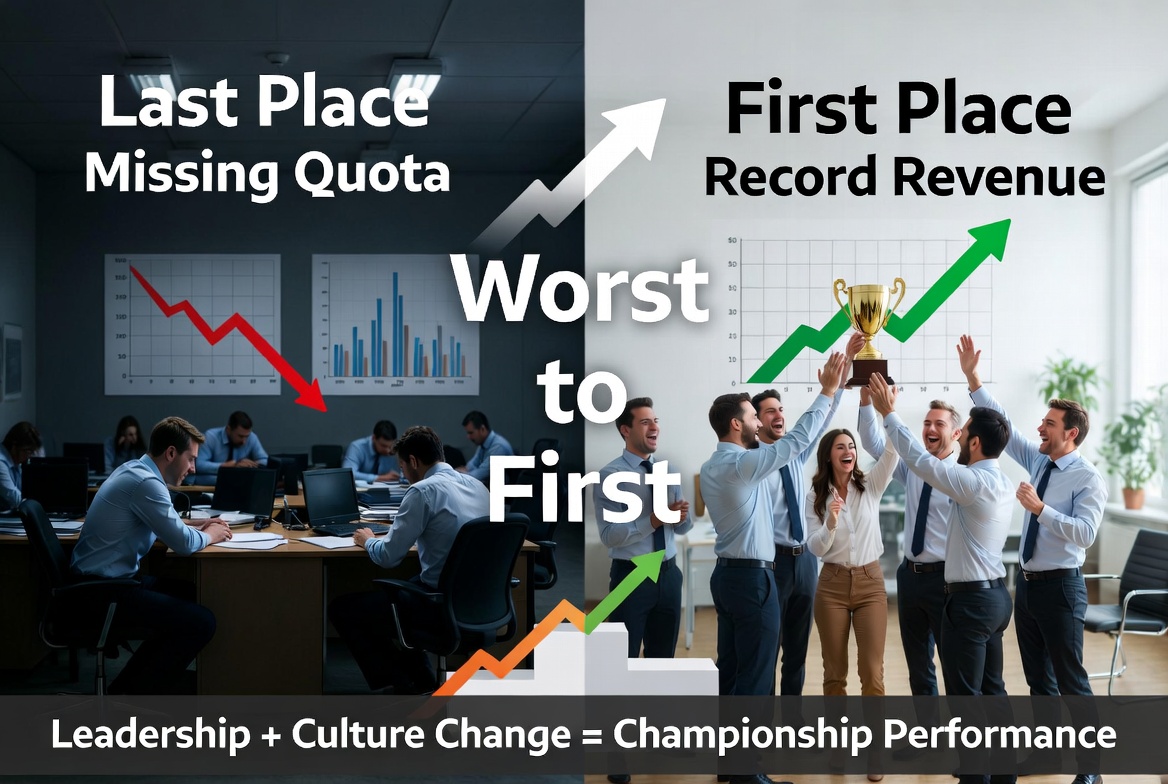
I’ll begin with some baseball. If you want to skip the baseball analogy, the worst to first sales team advice begins in paragraph 6.
In 2012 the Boston Red Sox finished dead last in the AL East with a dismal 69-93 record — their worst season in decades. The clubhouse was toxic, veterans were mailing it in, and manager Bobby Valentine had lost the room. One year later, in 2013, the same franchise went 97-65, won the division, and captured the World Series.
None of it happens without the leadership change.
The Red Sox fired Valentine and hired John Farrell as manager. Farrell brought a completely different philosophy: accountability, culture, and buy-in. He created a gritty, unified mindset that the entire roster — especially the veterans — bought into.
That culture shift created the environment for smart roster moves, renewed emphasis on fundamentals, and major personal performance rebounds from holdover players. Dustin Pedroia, David Ortiz, Jon Lester, Jacoby Ellsbury, and Clay Buchholz all elevated their games in 2013. They didn’t suddenly become different players; they simply performed at a higher level because the new leadership demanded excellence, provided support, and leaned on the veterans for clubhouse leadership.
Now translate that to sales.
Most sales teams are “not the best” but nowhere near the worst — and they often look a lot like the 2012 Red Sox. They hit quota some months and miss it others. Veterans have been around forever, know the product, but they’ve grown complacent. Pipelines are inconsistent, quota attainment is spotty, and the culture is polite but not hungry. Year after year, the team fails to finish at the top.
The fix isn’t more technology or a motivational speaker at the annual kickoff.
The fix starts with leadership.
Just like the Red Sox needed John Farrell, a sales team that wants to go from middle-of-the-pack to first almost always needs new leadership — or an existing leader who is finally empowered to lead. That means setting clear expectations, providing real training and coaching, upgrading talent where necessary, and holding everyone accountable. It means replacing the “country club” sales culture with strong organizational goals and genuine consequences.
When that happens, the magic follows:
- Veterans buy in and improve personally. The rep who’s been hovering at 75–80% of quota for years suddenly starts closing at a much higher level. Same territory, same accounts — just far better execution thanks to stronger coaching and a culture that rewards excellence instead of excusing mediocrity. Win rates rise, margins improve, and revenue soars.
- The team sheds dead weight and adds the right fits. Under strong leadership, it becomes easier to move out chronic underperformers who were dragging down the culture. Hiring shifts toward people who actually match the new philosophy instead of those with impressive resumes but the wrong mindset.
- Organizational goals become personal goals. Everyone rows in the same direction because the vision is clear and buy-in is no longer optional.
I’ve seen this exact sequence play out with sales organizations I work with when I recommended:
- One company replaced their VP of Sales and five regional managers, fast-tracked the new leaders with intensive training and coaching, and replaced about a third of their 50+ salespeople. Result: Revenue jumped from $24 million to $65 million in a single year.
- Another CEO stopped micromanaging his capable VP of Sales. We filled the VP’s gaps in recruiting and coaching through targeted training. Result: The company doubled revenue in just 18 months.
- A startup founder hired an experienced sales player/coach from outside the industry to both sell and manage the small team. Result: Revenue exploded from $2 million to $10 million in the first year.
- We helped a CRO identify and align three key sales leaders and 25 top salespeople around a clear mission. Result: The company tripled revenue — a goal set for five years — in only 18 months.
The 2013 Red Sox proved you don’t need a total rebuild to go worst-to-first. You need the right leader to reset the culture, get the veterans to buy in, and create the conditions for everyone — new and old — to perform at a championship level.
The same is true in sales.
Change the leadership. Change the culture. Watch the veterans become the difference-makers they always had the potential to be. That’s how you go from “OK” to first. And once you’ve done it, the trophy (or the President’s Club trip) takes care of itself.
If any of this sounds or feel daunting, we can help you simplify and execute. You can reach us right here.