
- August 22, 2026
- Posted by: Dave Kurlan
- Categories: Music and Sales, Understanding the Sales Force
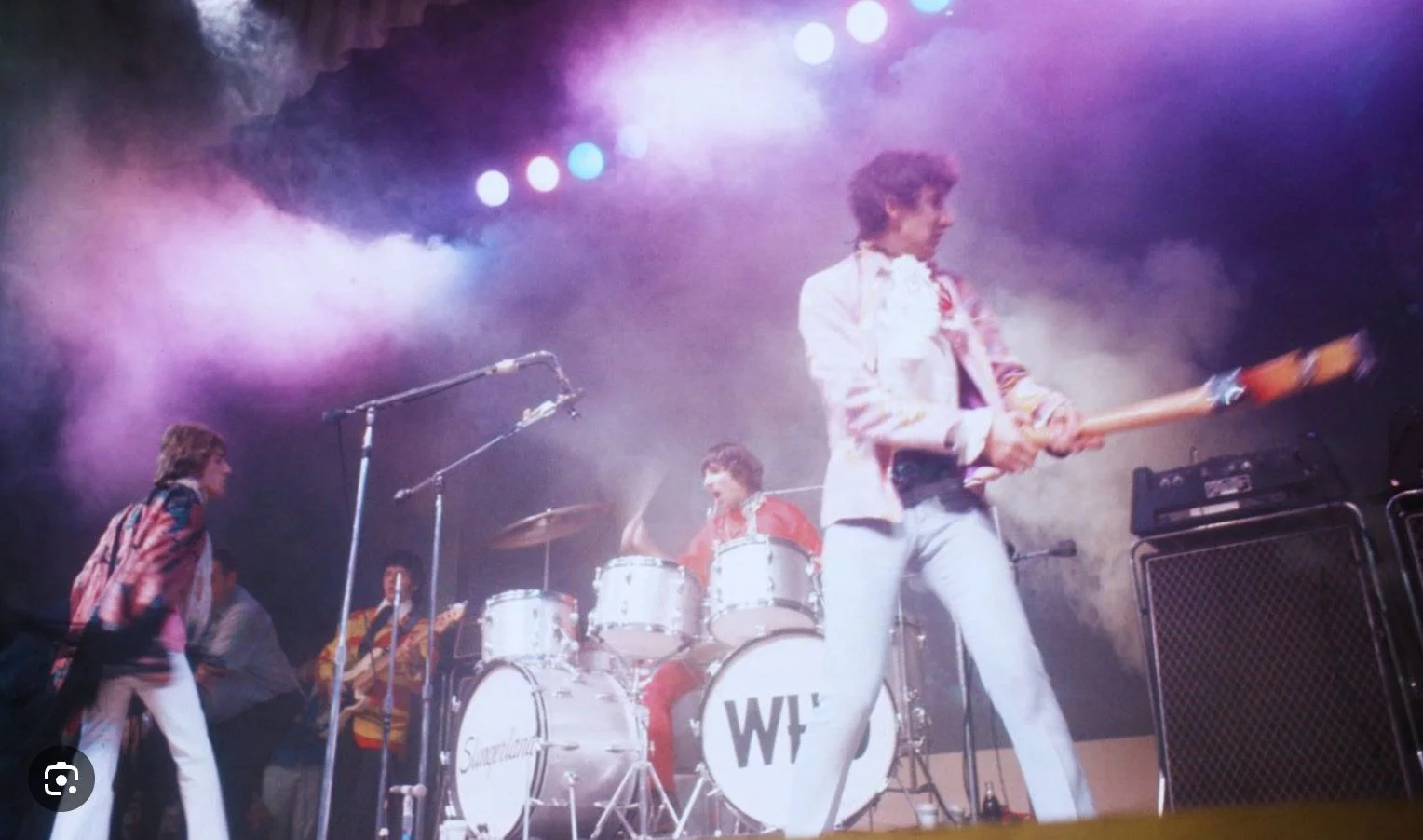
If you like music, this should be a fun sales analogy for you to dig into.
One of my Spotify playlists is a mixed favorites list — different genres tossed together. My other playlists are more tightly organized by style. On a recent three-hour drive, four consecutive songs came up in this order:
- The live version of “In the Mood” by Doc Severinsen and the Tonight Show Orchestra
- The live version of Elvis Presley’s “Suspicious Mind”
- “Popsicle Toes” by Michael Franks
- “My Generation” by The Who
Hearing them one after another made something click that I hadn’t noticed before. The difference in drumming styles between Ed Shaughnessy driving the Tonight Show Orchestra and Ronnie Tutt driving the Elvis Presley Show Band is as dramatic as the difference between two dominant types of salespeople. I felt the exact same contrast in the bass playing that followed — Wilton Felder’s tasteful lines behind Michael Franks versus John Entwistle’s dominant, almost lead-guitar approach with The Who.
Yes, these songs live in different genres. The difference that matters isn’t the genre, it’s whether the player chooses to serve the song or try to become the star of it.
And if you want a same-genre example, look no further than ‘Superstition.’ Stevie Wonder recorded it and also played the drums with a strong, funky time-keeping groove with no showmanship. Carmine Appice later recorded it with Beck, Bogert & Appice and took the opposite approach: heavy, powerful, and prominent drumming that steps forward instead of simply serving the song.
There are times when the drummer or bassist should be the star. It’s OK when it’s their band! Think Buddy Rich, Mick Fleetwood, Phil Collins, or Ringo Starr. But pivoting back to sales, most of the time, it’s not your band. It’s the prospect’s.
While every salesperson is different, most fall into one of four broad style categories:
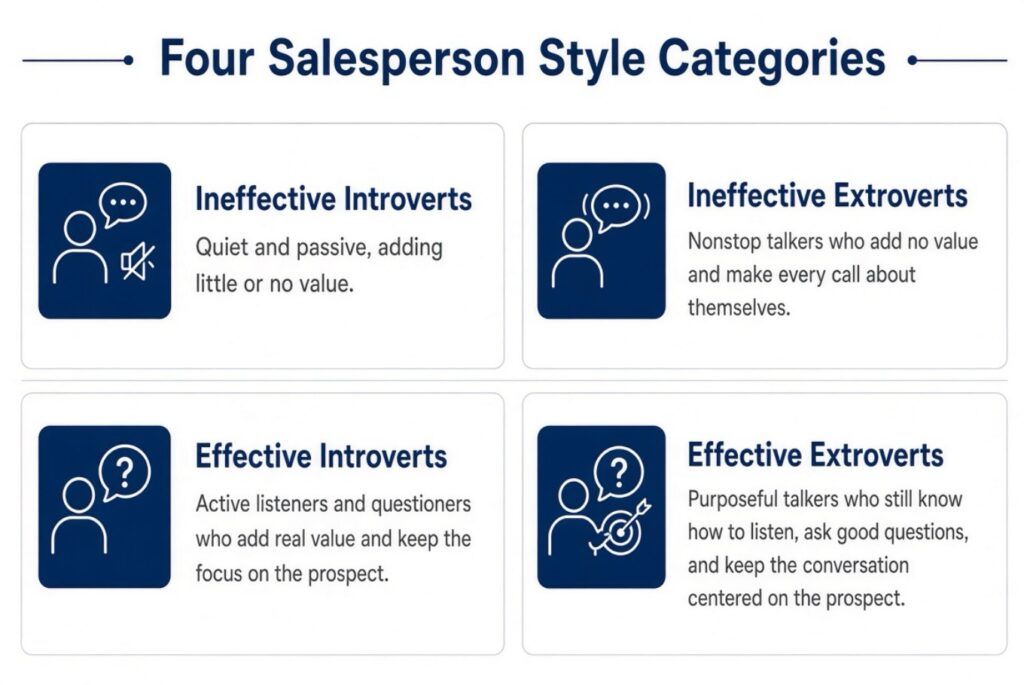
These four styles should not be confused with the 21 Sales Core Competencies. If anything, they are indicative of a salesperson’s capabilities in 3 of the 21 competencies:
- Consultative Seller
- Relationship Builder
- Value Seller
See all 21 Sales Core Competencies, the range of scores, comparison by industries and more.
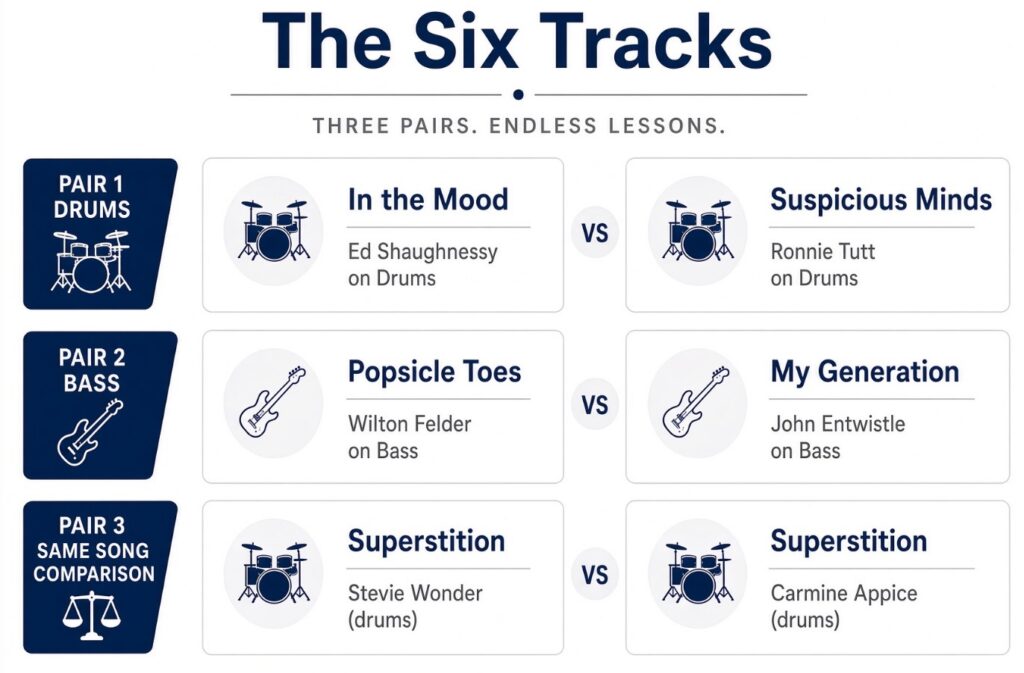
I’ve included links to all the songs so you can hear the differences yourself. Make sure you stay with each song past the first verse because most of the drumming and bass lines that I referenced kick in later in each song. Listen to how the drumming shapes the first two songs and how the bass playing shapes the second two songs. Then listen to the drumming differences in the two versions of Superstition.
In the Mood (Ed Shaughnessy on Drums)
Suspicious Minds (Ronnie Tutt on Drums)
Popsicle Toes (Wilton Felder on Bass Guitar)
My Generation (John Entwistle on Bass Guitar)
Stevie Wonder Superstition
Carmine Appice Superstition
Wilton Felder (of the Crusaders) plays bass on the original Michael Franks track. His line is groovy and has enough melodic character to move the song forward, yet it never steps on Franks’ sly vocal or the rest of the arrangement. It serves the track instead of trying to become the track. That is exactly the salesperson who keeps the conversation moving by listening and asking the right questions at the right time without making the call about himself.
That approach pairs cleanly with Ed Shaughnessy. Both are high-level players who drive the band while staying in service of the music — or, in sales terms, in service of the prospect.
Interestingly, it is often the introverts, not the extroverts, who are best suited to the consultative style of selling that depends on active listening and thoughtful questioning. Shaughnessy and Felder represent that side of the spectrum. The more dominant, story-telling salespeople who make the call about themselves sit closer to Tutt and Entwistle. That style can still produce results, especially in certain transactional or personality-driven environments, but it is harder to scale and less effective when the sale requires real discovery and trust.
So here’s the question worth sitting with:
If you were a bassist or a drummer as salesperson, would you rather be the one who wants to be the star of the show, or the one who stands out for the value he adds to the song, the band, the lead singer, and the overall performance?
Most of us already know which answer produces the better long-term results in sales. The only question left is which style we’re actually playing.
Making the shift from traditional, transactional selling to a true consultative approach is no longer optional if you’re selling anything complex, high-value, or with a long sales cycle. Most companies still underestimate how big that shift really is. It’s one thing to realize you need salespeople who listen and ask questions the way Shaughnessy and Felder play. It’s another thing entirely to help the Tutt and Entwistle types actually learn, practice, and stick with that approach. That’s the hard part — and that’s the work we do every day. If you’re ready to make the transition, you can reach us here.