
- February 2, 2026
- Posted by: Dave Kurlan
- Categories: Analogies, Understanding the Sales Force
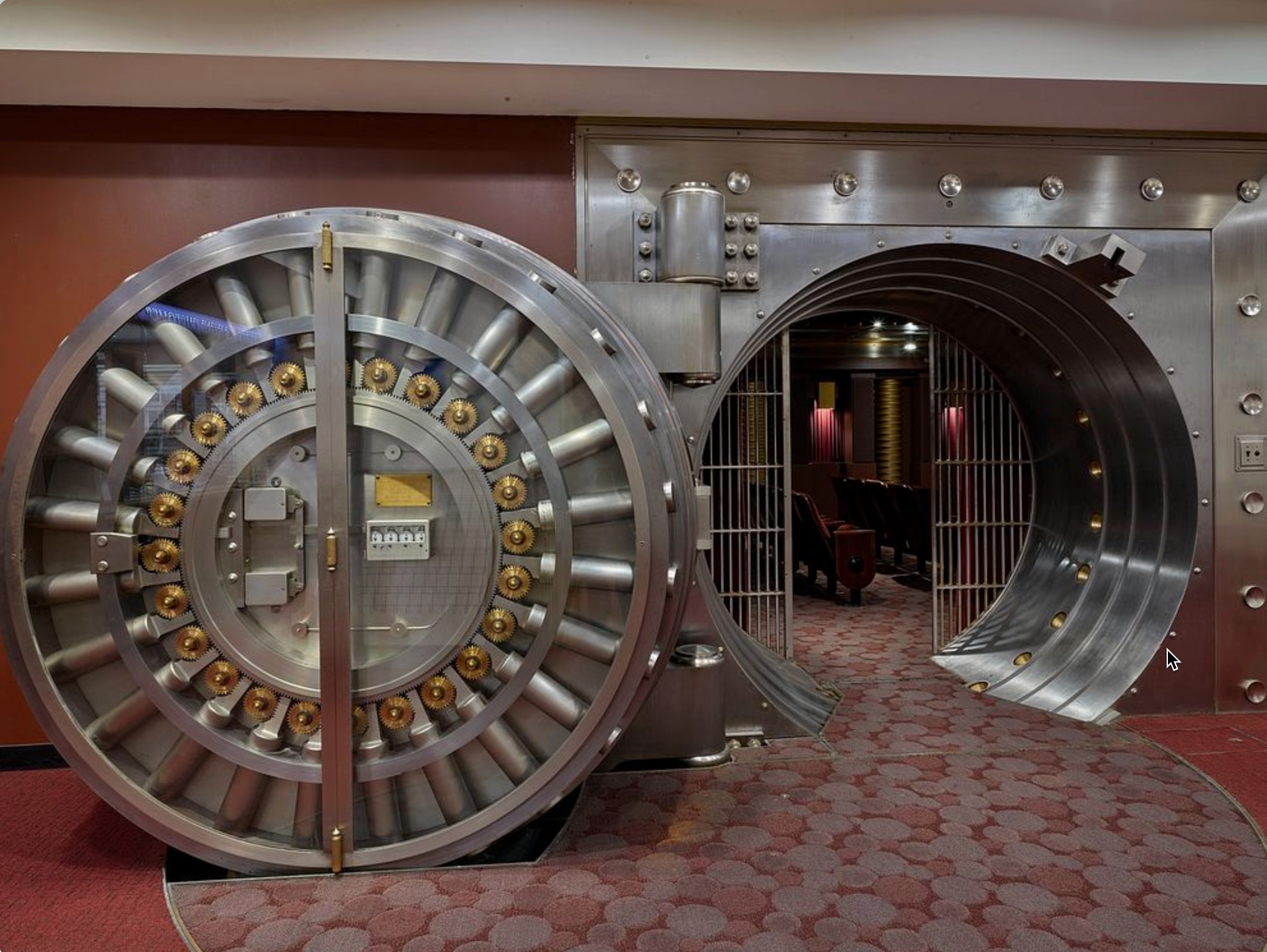
Your sales process should be locked down—and lockdowns make a killer analogy for how to treat your pipeline. In this article, I’ll share 10 ways to keep your opportunity locked down.
Locks, Vaults and Safes
Consider the following types of locks:
- Combination Lock – typical of what you might find on a gym or school locker
- Padlock – like what you might find on a shed or storage locker
- Room safe – similar to what you might find in a hotel room closet
- Vault – typical of what you might find in a bank
A good rule of thumb is as the size or value of your possessions increases, then the size, sturdiness and security of your lockup should increase as well.
The Sales Lockdown
What would happen if we paired up the locks with the stages of the sales process/pipeline? it might look something like:
Suspect = Combination lock
Prospect = Padlock
Qualified Opportunity = Room Safe
Closable Opportunity = Vault
Let’s further review the analogy of the locks with the four primary stages of a generic sales process:
- Suspect – a new meeting with a new prospect. Easy to open but low risk if someone messes with it.
- Prospect – a real differentiated opportunity with monetized, compelling, value-based reason to buy from you, and urgency to move forward. It’s sturdier, but it can still be picked and stolen by a competitor or unlocked by the prospect.
- Qualified – opportunity meets all of the requirements of a qualified opportunity including commitment, willingness to buy value, engaged stakeholder(s), known timeline, known decision-making criteria, known decision-making process, competitive advantage, good fit. At this point it’s more difficult to crack, but if you aren’t paying attention, a worthy competitor could still manage to steal it away.
- Closable – you’ve met the requirements of the prior three stages and have provided a needs and cost appropriate solution. It’s time-locked, multi-layer, alarm-triggered and nothing can happen without serious effort or complacency from you.
It shouldn’t come as a surprise that incrementally increased security is required as property value increases, and by marrying sales stage definitions, we find the most value in closable opportunities.
But are you treating your closable opportunities as you would the valuables you would have in a vault? You must protect those opportunities at all costs:
- You regularly check on them. You’re in touch with them, staying on top of the opportunity, monitoring where it is in their process (that you uncovered during Qualification). Stuck in Legal? Stuck in Approval? Stuck in Accounting? Sitting on the decision maker’s desk? Not submitted?
- You have an inventory of them – your CRM should have every possible detail about the company, its stakeholders, their compelling reasons to buy from you, the competition, the timeline, and every conversation you have had with them. This is a requirement for insurance.
- You have insurance on them – not in the literal sense, but in the figurative sense. It’s your plan B and C. Who assumes control of the account if you get sick and aren’t available? Who assumes control if your contact at the customer gets sick or leaves the company? What is the plan if there is a last-minute change in the rules, requirements, expectations, timeline, competition, etc.? Plan B and C could win the day.
- You are keeping the competition locked out. Nothing is more important than this one. Build a moat. Build a wall. Build a relationship. Build a channel of communications. Build a bridge. Make sure that nothing, and I mean nothing, can happen to your deal, still sitting in the vault.
The Challenges to Maintaining Security
Despite the practicality and logic of what I’ve shared, there are several problems:
- Most of your salespeople not only don’t live in their CRM, getting them to complete a simple task like entering or updating an opportunity in CRM is like pulling teeth. That makes #2 a challenge.
- Modern salespeople rely too much on their tech stack, so checking on an opportunity is relegated to email or text, annoying as all get out, likely to be missed, and completely devoid of nuance. You are left to read between the lines because you can’t have an actual conversation over email or text.
- Most salespeople and sales managers have never given thought to #3 and if pushed to complete that, have little idea where to begin.
- Most salespeople become complacent at closing time – they sent the proposal and become passive, but based on what we’ve already discussed, we know that is an unreliable approach.
- And #4? That’s what this entire article is about. Keeping the competition locked out. But how? It requires the following ten conditions to be in place, with most of them being two-way conditions:
- Trust (they believe you’ll deliver what you promise—and you’ve earned it by always doing what you say you’ll do)
- Reliance (you’re their go-to expert, not just another vendor; they call you first when something comes up)
- Relationship (personal connection beyond the transaction; they actually like and respect you as a person and enjoy their time with you)
- Loyalty (they’d rather work with you than anyone else, even if a competitor undercuts price a bit)
- Commitment (both sides are invested; they’ve verbally or in writing said “we’re moving forward together”)
- Responsiveness (you’re both lightning-fast and thorough with reach outs; no radio silence, ever)
- Fairness (the deal is equitable—no gotchas, hidden fees, or one-sided terms)
- Transparency (full openness about pricing, process, potential risks, and what’s happening behind the scenes)
- Urgency (they feel the consequences of delay and see clear value in acting now, not later, and recognize that you have a comparable urgency to help them)
- Proof (social proof, case studies, references, or demos that remove all doubt you’ll deliver results)
What we’ve discussed in this article is the equivalent of a full-court press. Doing whatever it takes. Consistently. Most sales teams don’t do this, don’t know how to do this, and don’t know where to begin. As always, just reach out to us for help.