
- January 23, 2026
- Posted by: Dave Kurlan
- Category: Understanding the Sales Force

I had a very large client who wanted to significantly boost revenue from their resellers. I learned their territory salespeople had wonderful relationships with those resellers but weren’t getting business from some of them. How could that be?
They believed they were following the principles of Relationship Selling and were getting much of that right. Relationship Selling at its core, is a genuine, mutual, value-driven partnership between a salesperson and a client that’s built on trust, consistency, and a deep understanding of the client’s world—not just their immediate need, but their business, their challenges, their goals, and how those evolve over time.
It’s NOT:
- Being the “fun” rep who takes people to ball games or remembers birthdays (those things can happen, but they’re surface-level and don’t define the relationship).
- Manipulative “rapport-building” tactics designed to make someone like you enough to buy.
- Transactional friendliness that disappears the moment the deal is signed.
It IS:
- Trust earned through credibility and reliability. You do what you say you’re going to do, every time, even when it’s inconvenient. You deliver bad news fast and honestly. You protect their interests as fiercely as your own.
- Deep business understanding. You know their industry, their competitive pressures, their internal politics, and their personal success metrics better than most of their own employees do. You’re a strategic resource, not just a vendor.
- Consistent value over time, whether there’s an immediate sale or not. You share insights, make introductions, flag risks, and offer ideas that help them win—even if it doesn’t directly lead to revenue for you right now.
- Mutual benefit and respect. It’s not one-sided devotion to the client; it’s a two-way street where both parties invest in each other’s success. The client gives you access, honest feedback, and fair consideration because they see you as a partner, not a supplicant.
- Long-term orientation. You’re thinking in years, not quarters. You’re willing to walk away from a bad deal or push back when something isn’t right for them, because preserving the relationship is more valuable than any single transaction.
In short, an authentic sales relationship is when the customer sees you as an extension of their own team—someone they turn to for counsel, not just quotes. When that’s in place, price becomes secondary, loyalty becomes natural, and referrals flow without asking.
Back to my client. Had they accomplished 1-5?
It’s the classic misunderstanding of how people treat “relationship selling,” like it’s a long game of being the nice, patient friend who schmoozes forever, hoping the prospect eventually throws them a bone out of loyalty or guilt.
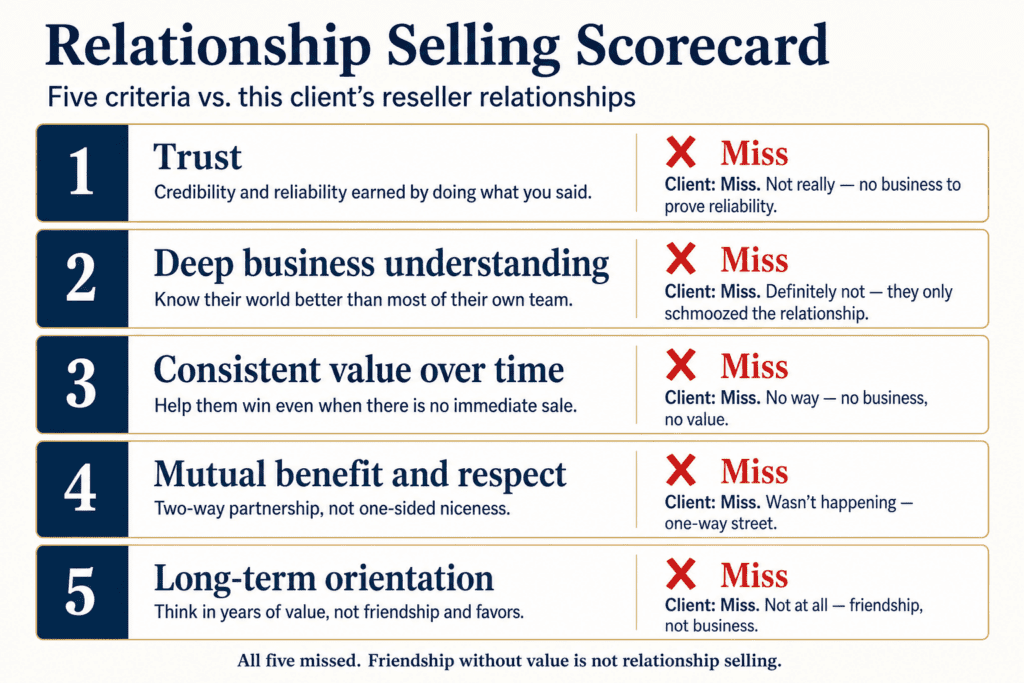
Those “relationships” often fail because they’re one-sided or transactional in disguise – the salesperson is investing time and energy,but not earning the right to the business by digging deep into challenges, differentiating themselves, or guiding the buyer effectively. It’s like being the fun uncle who shows up with gifts but never gets asked for real advice when it matters.
In my view, a true sales relationship only emerges as a byproduct of effective consultative, value-based approach to selling: listening, asking tough questions, uncovering compelling reasons to change, establishing your authority as a subject matter expert, and becoming indispensable. When that’s happening, the “relationship” isn’t about friendship – it’s about respect and trust that’s earned through results and insight. And that’s when the business flows naturally, without years of waiting.
So ask yourself: Are your ‘great relationships’ built on value and mutual respect—or just on being the nice rep waiting for a favor?