
- September 4, 2026
- Posted by: Dave Kurlan
- Categories: Analogies, Baseball and Sales, Dave Origins, Understanding the Sales Force
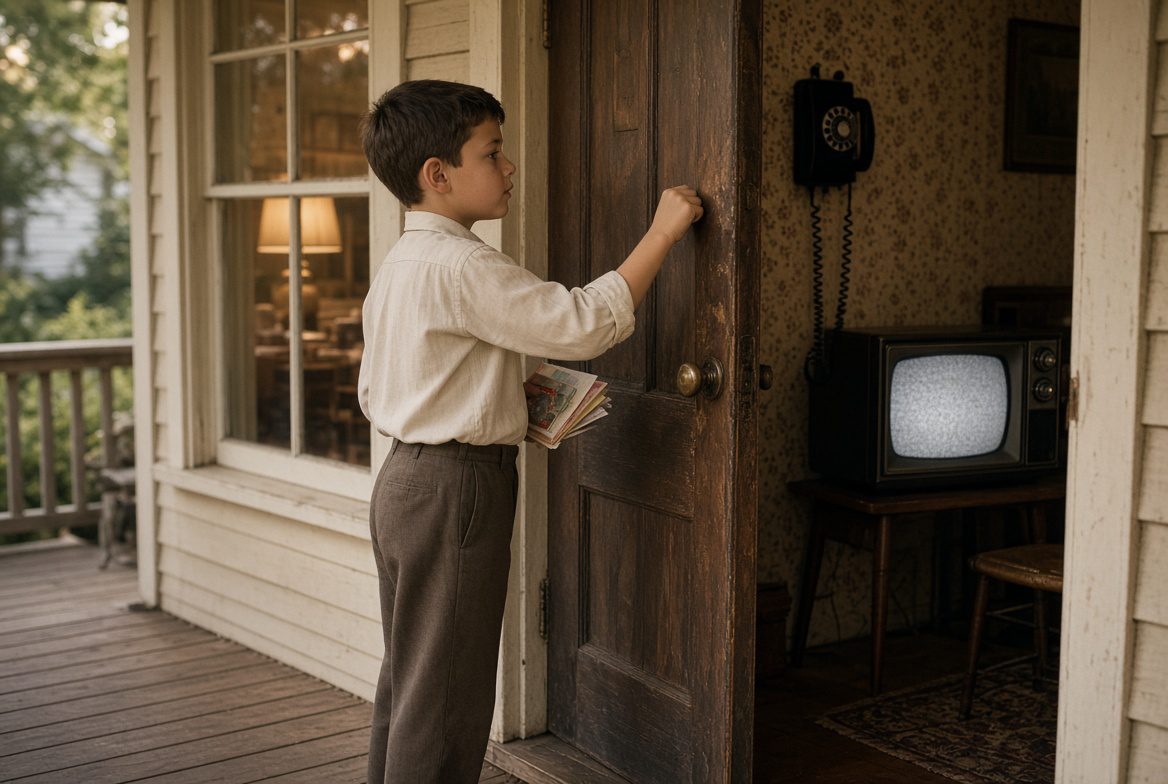
When I was growing up, the phone lived on the kitchen wall. Rotary dial. One line. One 617 area code for the whole state. Two of the exchanges weren’t even numbers. We had Pleasant, or PL, and Swift, or SW. My home number was SW8-xxxx, and that’s all anyone dialed unless they were calling another world.
Then came push buttons. Extra phones. Extra lines. Cordless with a foil antenna you had to yank up. A corded phone in the car. Flip phones. Satellites. And now a glass computer in everybody’s pocket.
That was quite the evolution.
Television did the same thing. I can still see the square black-and-white set and Howdy Doody. Then color. Then four stations off a rooftop antenna, snow and all. Cable. Pay-per-view. Big screens. HD. Flatscreens. 4K. Hundreds of networks, apps, and ways to watch.
Want to find something to watch? So many choices. So. Much. Noise.
Phones evolved. Televisions evolved. Almost everybody got excited about the next version.
Selling had an evolution too. The difference is that almost nobody got excited, and most salespeople never boarded the train.
A Dave Origins Story
I was about ten when I sold Wallace Brown greeting cards. Not for the money. I watched a big brown UPS truck roll past the house and I wanted a package with my name on it. Boys’ Life had an ad for the greeting cards and I figured that would get me a UPS delivery. When the box arrived, I took my entire inventory (a couple dozen cards) and started knocking on doors. No training. No product knowledge. No idea. A woman opened the door and I closed. “Wanna buy some greeting cards?” At ten, looking six, I had mastered the pity sale.
Then multi-level marketing: cleaning supplies from Bestline. I evolved. Instead of “wanna buy?” I started with, “If you have a stain you haven’t been able to get out of the carpet, I’ll take it out.” The stains came out and I sold a lot of spray cleaner. I had gone from closing, to doing a demo, and I thought I was selling.
Then I bought a shiny new red riding mower and sold lawn mowing. Doors again. More strangers. Who was going to say no to a fourteen-year-old who would show up every week, mow and sweep, and charge ten dollars? I evolved again because this time around I asked two questions. “Does anyone mow your lawn?” “Does he really want to do that every week when I could do it for ten dollars?” I got lawns. I paid off the mower. I had not taken an economics class yet.
That was the entire evolution that mattered. I stopped pitching and started asking.
The profession got a version of that in the 1970s. Consultative selling. Xerox. SPIN. Wilson Learning. Mack Hanan. Later, Solution Selling. Later still, Baseline Selling, which put a consultative approach on a baseball diamond so people could remember the order. Get to first. Get to second. Get to third. Score. Four stages that include every critical milestone and a methodology to go with it.
We have now had fifty-plus years of books, tapes, videos, blogs, virtual classrooms, blended learning, and self-paced modules, all teaching some form of a consultative approach.
Objective Management Group has assessed more than 2.5 million salespeople but only seventeen percent are strong at the Consultative Seller Competency, which is but one of the twenty-one Sales Core Competencies.
Seventeen.
After half a century.
That is the evolution that passed salespeople by.
What Did Change
Technology gave salespeople a place to hide. Tools instead of skills. Sequences instead of conversations.
Inbound ruined outbound.
And then came the Buyer Journey. Depending on which slide deck you believed, the prospect was already 57% to 82% of the way home before you ever met them. The promotion of the Buyer Journey did more damage than any competitor. It gave salespeople permission to present, demo, quote, propose, and chase.
They ask, “If they’re almost done, why start at the beginning with a consultative approach?”
Because a good salesperson does the thing the other 83% won’t do. They do bring the prospect back to the beginning. They ask for context. They ask how they got here and why. They find out the buying process was built around a symptom, and the root cause never got named.
That’s not slowing the deal down. That’s the difference between a vendor and the person who actually took the time to understand them. Differentiation sells.
Baseball bats got lighter. Gloves got bigger. Launch angle became a religion. You still have to touch first, then second, then third, then home. Skip a base and you’re out, no matter how hard you hit the ball.
The Unused Weapon
All those networks and apps and channels on the television? They’re noise. That’s also why salespeople can’t get a prospect’s attention. Same noise. Too many people grabbing for your prospect’s attention.
The phone is the opposite of that.
Cell phones used to be personal. COVID ended that. People put the C or the M number in the email signature and made it public. No gatekeeper. Almost no competition except the spam callers selling business loans, roof replacements, and vacations.
There has never been a better time to use the phone. Most salespeople would still rather send another email into the prospect’s deleted folder.
Tech will not sell for you. It will not make you better at the thing only 17% can do. It will make you more efficient at being average.
The noise is the television problem. The phone is how you cut through it. The questions are how you keep the prospect on your channel once you have their attention.
Inbound ruined outbound. The phone, the questions, and the bases in order are still sitting there.
It’s not too late to join the evolution. Most of your competitors won’t. We can help.