
- June 15, 2026
- Posted by: Dave Kurlan
- Categories: Baseball and Sales, Best Top 10 Lists, Understanding the Sales Force
The Baseball Hook
We attended a youth baseball tournament where our son coached a 10-year-old team. They won the first game 35-2 by the mercy rule! They lost the second game 10-0 to a bigger, stronger team. They came back from a 9-2 deficit to win the semi-final 10-9. And in the championship game, they lost to the same dominant team 19-1.
My son’s team was well-coached and played hard, but the other team was simply bigger, stronger, and better prepared. The kids can be proud of their effort. Still, the weekend was a perfect microcosm of what happens in sales every single day.
The Sales Analogy
Salespeople experience the exact same rollercoaster.
- You crush an easy win (the 35-2 mercy rule) with a happy existing customer who already loves you.
- You get shut out (10-0) because the prospect has a strong existing relationship with a bigger, better-known competitor.
- You dig in, get pissed off, revise your proposal, and stage a gritty comeback win (10-9) against two competitors on the short list.
- Then you lose the big one (19-1)—the deal that could have made your year—to that same entrenched competitor who was already the incumbent.
The lesson? Talent and effort aren’t enough. You have to prepare differently based on the competition, the situation, and the prospect’s hidden biases.
Key Lessons from the Diamond
Winning consistently requires knowing your opponent’s game plan, the customer’s agenda, and having an alternate strategy to disrupt their default path. Here are the biggest factors we’ve seen across hundreds of sales teams and countless win/loss reviews:
Buyer Psychology & Decision Drivers
- Is the competitor viewed as the “safe” choice (you can’t get fired for picking IBM)?
- Is it the easy, no-brainer decision?
- Does the buyer prioritize lowest price, lifetime cost, or ROI?
- How heavily does the personal relationship with the salesperson weigh?
- How important is company reputation and prior positive experience?
Competitive Strengths
- Specialization in the prospect’s vertical?
- Superior fulfillment timeline or implementation capabilities?
- Better ability to mitigate disruption during change?
- Stronger recommendations from trusted colleagues or sources?
Your Execution
- Responsiveness of your salesperson, customer service, and technical support.
- Training and ongoing support.
- Overall ease of doing business.
- How thoroughly you solve the real problem versus just addressing symptoms.
Price and relationship matter—but they’re only two data points out of many. Most companies and salespeople never truly know why they win or lose because they skip the win/loss analysis, exit interviews, or even checking their CRM data.
Look at These Real-World Examples
In two similar companies, win rates swung wildly between teams. One group sat at just 24.8% while another approached 44%. “No decision/status quo/no sense of urgency” crushed 26% of their losses, with price and poor fit also prominent.
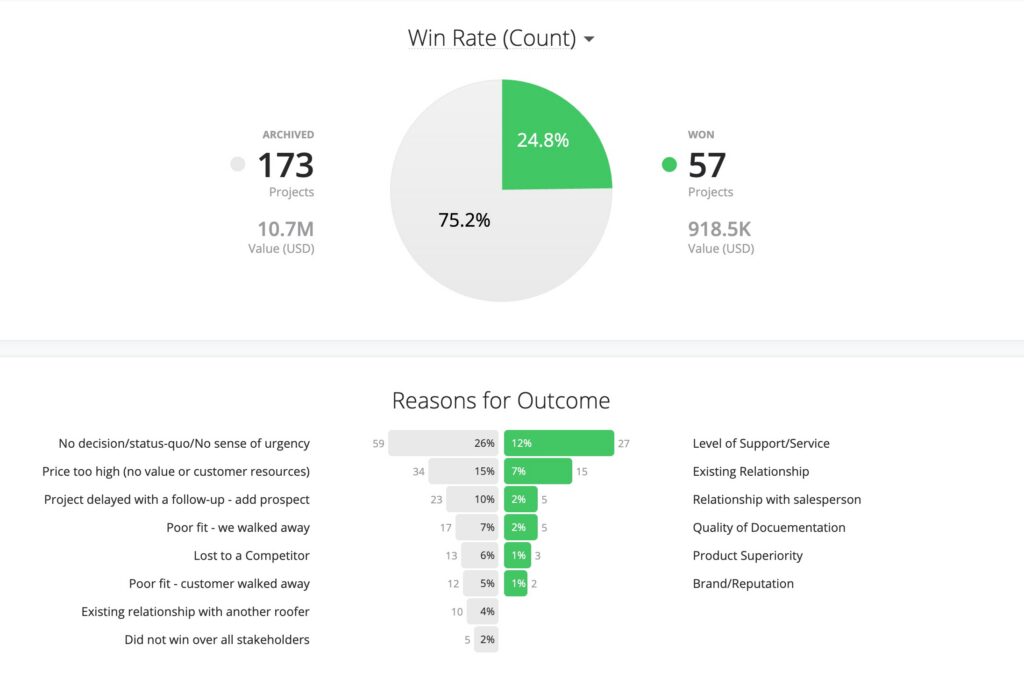
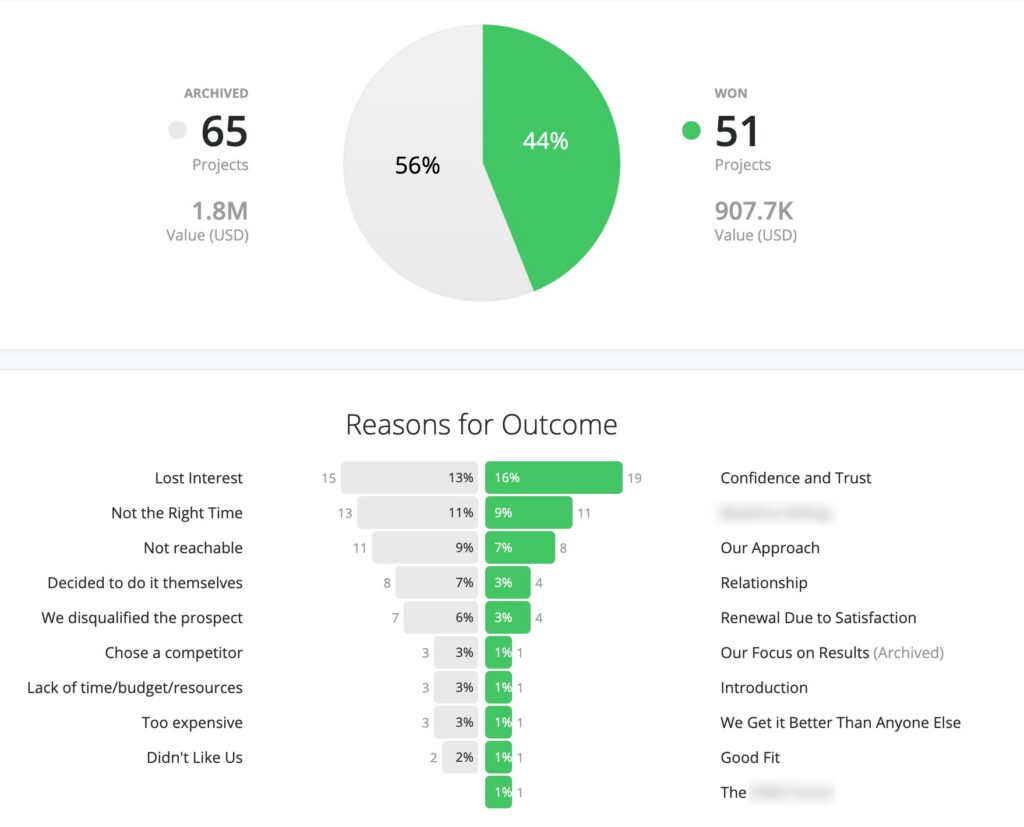
These aren’t anomalies. The gaps usually trace back to differences in management, process, and execution.
Why Win Rates Vary So Much
It often comes down to one or more of these (many of which map directly to the Baseline Selling stages or OMG’s 21 Sales Core Competencies):
- Unqualified sales managers in the role.
- Faulty sales selection and hiring.
- Ineffective or non-existent onboarding.
- Unclear expectations and lack of accountability.
- Inconsistent and/or ineffective coaching.
- Non-adherence to a repeatable sales process.
- Insufficient deep discovery (not reaching second base).
- Lack of thorough qualification (failing to reach third base).
- Lack of commitment from the salesperson or team.
The list goes on, but the pattern is clear: teams that consistently follow the sales process and analyze outcomes win more winnable opportunities.
Final Thoughts
You can’t win every deal, but you can win every winnable one. The key is identifying them early—before you waste time spinning your wheels on an opportunity that has no intention of buying from you.
In addition to all the sales assessment, sales process, sales recruiting and sales and sales leadership training and coaching services we provide, we help companies build idiot-proof custom sales scorecards that accurately predict win probability using your own historical win/loss data and real-world conditions. It’s like having a coach in the dugout calling pitches before the game even starts.
The Spaceman, Bill Lee, who was a star pitcher for the Boston Red Sox from 1968-1977, once told me, “Rejection is great. If you already know, before the game even started, that you were going to win, nobody would want to play the game.”
Maybe that’s true in baseball.
But in sales, before you put fingers to your keyboard to type the first word of a proposal, you SHOULD already know that you’re going to win, and if you don’t know, ask why you’re typing the darn thing in the first place!
Reach out if you’d like to explore a custom sales scorecard for your team.